
by Steve Sorbo | Feb 6, 2026 | Uncategorized
Apple offers several simple ways to share Wi-Fi network passwords. When someone nearby tries to connect to a Wi-Fi network with an iPhone, iPad, or Mac, and they are in your Contacts app, you will be automatically prompted to share the network password with them. Additionally, in the Passwords app, you can display a Wi-Fi network QR code that anyone can scan to join the network. However, sometimes you need to share a password via email or text. To look up a Wi-Fi password on an iPhone or iPad, open Passwords, tap Wi-Fi, select the desired network, and tap the obscured Password field. A Copy Password button makes it easy to copy. In the Mac version of Passwords, hover over the obscured password and click the revealed password to copy it.

(Featured image by iStock.com/jpkirakun)
Social Media: Apple makes it easy to share Wi-Fi passwords without requiring anyone to type them. We explain how you can do this nearly automatically, with a QR code, or by looking up the password and copying it so you can paste it into an email message or text.

by Steve Sorbo | Dec 5, 2025 | Uncategorized
We’re approaching the end of 2025, so we encourage you to consider your New Year’s resolutions. For many people, the new year offers an opportunity to reflect on habits we’d like to adopt or solidify. Although we support reducing social media use and making other positive lifestyle changes, we’d like to suggest a few additional resolutions to improve your digital security and reduce the risk of bad things happening to you online.
If you read through this list and think, “I’m already doing all that,” then you’re done. Keep up the good work!
Back Up All Your Devices Regularly
The most important thing you can do to avoid digital disasters is to back up your data regularly. Bad things happen to good devices, like a Mac’s SSD failing, an iPhone falling into a pool, or data being lost due to theft, fire, or flood. With a solid backup plan, you can recover from nearly any problem.
For the Mac, the easiest way to back up is to use an external drive with Time Machine, but an off-site or Internet backup is also essential. Backblaze is a good choice, but there are numerous online backup services. For iPhones and iPads, it’s simplest to back up to iCloud, which automatically happens every night if you turn it on in Settings > Your Name > iCloud > iCloud Backup. You can also back up iPhones and iPads to your Mac if you do not have enough iCloud storage space. Apple Watches automatically back up to their paired iPhones, and that Watch data is included in iPhone backups, making restores straightforward. Whatever your setup, restore a few files periodically as a test to make sure your backups are working.

Always Install Security Updates
An important step to enhance your security is to install new operating system updates and security updates promptly after Apple releases them. While the specifics rarely make headlines because they are highly technical and detailed, you can gauge the significance of security updates by noting that a typical update fixes 10–30 vulnerabilities identified by Apple or external researchers. Other security updates include only one or two fixes, as they’re aimed at addressing zero-day vulnerabilities currently being exploited in the wild.

It’s usually wise to wait a few days after an update appears before installing it, in case it causes any undesirable side effects. Although such problems are rare, when they do happen, Apple quickly pulls the update, resolves the issue, and releases a new version, typically within a few days.
Use a Password Manager
We’ll keep emphasizing the importance of a password manager until passkeys—the replacement for passwords—become widespread, which will take years. Until then, if you’re still typing passwords manually or copying and pasting from a list stored in a file, please start using a password manager like 1Password or Apple’s Passwords, which is now pretty good. A password manager provides six significant benefits:
- It generates strong passwords for you. Password1234 can be hacked in seconds.
- It stores your passwords securely. Anyone walking by your unlocked Mac can read an Excel file on your desktop.
- It enters passwords for you. Wouldn’t that be easier than typing them in?
- It audits existing accounts. How many of your accounts use the same weak password, which has likely been stolen in multiple breaches?
- It lets you access passwords on all your devices. Logging in to websites is just as easy on the iPhone and iPad!
- It can store and enter two-factor authentication codes. Whenever possible, protect important accounts with two-factor authentication so even a stolen password won’t provide access.
A bonus benefit for families is password sharing. It allows couples to share essential passwords or parents and teens to share specific passwords.

Using a password manager is quicker, simpler, and more secure. If you need assistance getting started, reach out.
Beware of Phishing Email
Individuals and businesses often experience security breaches due to phishing, which involves fake emails that trick someone into revealing login details, credit card numbers, or other sensitive data. While spam filters catch many of these attacks, you must stay alert. Here’s what to watch out for:
- Any email that tries to get you to reveal information, follow a link, or sign a document
- Messages from unfamiliar people, asking you to take an unusual action
- Direct email from a large company for whom you’re an anonymous customer
- Forged email from a trusted source requesting sensitive information
- Urgent threats like “account locked,” “unauthorized charge,” or “action required”
- All messages that contain numerous spelling and grammatical mistakes

When unsure, avoid clicking the link or replying to the email. Instead, reach out to the sender via another method to verify the message’s authenticity. Legitimate companies—especially Apple, financial institutions, and cellular carriers—will never ask for your password or two‑factor codes by email, text, or voice.
Never Respond to Unsolicited Calls or Texts
Phishing attacks increasingly take place via texts and phone calls—and even some via deepfake audio and video. Because of weaknesses in the telephone system, these messages and calls can appear to come from trusted companies like Apple and Amazon. Other common scams warn about unauthorized logins or payments to trick recipients into calling scammers, advertise fake deliveries with malicious tracking links, or send fake two-factor authentication messages that prompt recipients to click a link to “secure” their account.

Avoid clicking links in texts unless you recognize the sender and it makes sense for you to receive that link. (For example, Apple might send text messages with delivery details for a recently placed order.) Never enter login information on a website you reach through a link because you can’t be sure it’s legitimate. Instead, if you’re interested in more details, go directly to the company’s official website by typing its URL into your browser, then log in from there.
For calls from companies, unless you’re expecting a callback regarding a support ticket you opened, don’t answer—caller ID can be spoofed. Let the call go to voicemail, and if you believe it’s important to respond, look up the company’s phone number from a reliable source and contact someone at that number instead of using the one provided by voicemail.
Avoid Anything Associated with Sketchy Websites
We won’t dwell on this last point, but it’s worth noting that you’re much more likely to encounter malware on fringe websites or those that cater to societal vices. The more you can steer clear of sites that deal with pirated software, cryptocurrency, adult content, gambling, or the sale of illicit substances, the safer you’ll be. That’s not to say reputable sites haven’t been hacked and used to spread malware, but such cases are far less frequent.
Don’t call numbers from pop‑ups or ads, don’t grant remote access, and don’t pay for any service you didn’t seek out unprompted. Instead, go directly to the company’s official site (type the URL) or contact us for help. And never paste commands into Terminal from websites or “verification” pages—you could install malware without realizing it. If you are worried after spending time in the darker corners of the Web, download a free copy of Malwarebytes and manually scan for malware.

Let’s raise a glass to staying safe online in 2026!
(Featured image by iStock.com/Marut Khobtakhob)
Social Media: Kick off 2026 with smart security habits: back up every device, stay current on software updates, outsmart phishing attempts, avoid sketchy sites, and streamline your logins with a password manager.

by Steve Sorbo | Dec 5, 2025 | Uncategorized
One of the big wins of using a password manager is that you don’t need to remember or enter most passwords—the app does that for you. Even those passwords that must be entered manually can be looked up if you forget them.
However, people who don’t use password managers regularly forget passwords and have to reset them—some surveys suggest that roughly half of all users admit to forgetting at least one password each month. While most account passwords can be easily reset by email, the Apple Account is a notable exception. Because it contains so much sensitive information, Apple protects it against relatively easy email hacks, which means recovering a forgotten Apple Account password requires different methods. So what should you—or someone you know—do if they forget their Apple Account password? And, what can you do in advance to make recovery painless?
Apple Account Recovery Methods
Apple offers five ways to regain access to an Apple Account if the password is forgotten and needs to be reset:
- Two-factor authentication: When you try to change your Apple Account password, Apple first sends an approval request to any trusted device that you can unlock with a passcode or password. By using this second, trusted factor, Apple can be sure that you’re the person requesting the password reset.
- Trusted phone number: If no trusted device is available because it has been lost, broken, or stolen, Apple falls back on sending a six-digit code via SMS text message or a voice call to a trusted phone number. While not quite as secure as a trusted device, this is still a good way to reset a password.
- Recovery contact: If neither a trusted device nor a trusted phone number is available, as might be the case for someone who has only an iPhone and has lost access to it, users can turn to a recovery contact—a person who can help in an emergency. The recovery contact simply looks up the one-time code and shares it.
- Recovery key: If the user has enabled a recovery key—a 28-character code—they can enter that to reset the password instead of using Apple’s Account Recovery (next). Using a recovery key is fast and easy, but you must first set it up and store it in a location accessible during a password reset. Only tech-savvy people who want more control over the account recovery process should set up a recovery key.
- Account Recovery: As long as the user hasn’t set up a recovery key, Apple offers an Account Recovery service when no trusted devices are available, no trusted phone numbers can receive verification codes, and no recovery contact is set or reachable. Account Recovery takes hours or days and relies on automated checks to confirm that the person resetting the password is doing so legitimately.
Setting Up Recovery Methods
Let’s run through how to set up each of these so you can enable the appropriate ones for your account and help your Apple-using family and friends do the same. Setting up all of these methods takes place in Settings > Your Name > Sign-In & Security (iPhone or iPad) or System Settings > Your Name > Sign-In & Security (Mac).
- Set up two-factor authentication: Nearly everyone already has two-factor authentication enabled. To confirm that, look at the Sign-In & Security screen. If two-factor authentication is off, turn it on; if it’s active, tap or click Two-Factor Authentication to view your trusted devices.

- Specify trusted phone numbers: You can set one or more trusted phone numbers in the same Two-Factor Authentication screen that lists your trusted devices for two-factor authentication. Scroll to the bottom and tap or click Add a Trusted Phone Number, as shown above.
- Add recovery contacts: Adding a recovery contact is similarly easy. On the Sign-In & Security screen, tap or click Recovery Contacts, then tap or click Add Recovery Contact. Apple suggests family members and frequent correspondents, but you can specify someone else as well. People in your Family Sharing group are added automatically; other people have to accept your request. There’s no harm in having multiple recovery contacts. If someone adds you as a recovery contact, you’ll see that at the bottom of the Recovery Contacts list. To help someone recover their account, tap their name on the Recovery Contacts screen, then follow the prompts to provide them with a recovery code.

- Create a recovery key: To set up a recovery key on the Sign-In & Security screen, tap or click Recovery Key, then follow the onscreen instructions. When you’re done, print or write down your recovery key and store it in a secure place. To complete the setup, you’ll need to confirm the key. Once you’ve set up a recovery key, resetting the password requires entering the key and a verification code sent to a trusted phone number. Also note that if you turn on Advanced Data Protection for iCloud, you must have a recovery key or recovery contact because Apple won’t be able to help you recover your account.
- Invoke Account Recovery: You don’t need to do anything to set up Account Recovery—it’s merely the last-ditch option in case everything else fails.
Although that might seem like a lot, it should take only a few minutes to make sure two-factor authentication is turned on, specify a trusted phone number or two, and add one or more people as recovery contacts. Most people shouldn’t set up a recovery key because it prevents them from using Apple’s account recovery process.
Reset the Apple Account Password
You can start the process of resetting your Apple Account password in three places:
- On a trusted device: If you have a trusted device—one that you unlock with a passcode or password—using it to reset the password with two-factor authentication is by far the most straightforward approach.
- In the Apple Support app on a borrowed device: If you don’t have a trusted device but do have access to a trusted phone number or recovery contact, you can initiate the process from someone else’s device using the Apple Support app. Scroll down to Support Tools, tap Reset Password, tap Help Someone Else, enter your Apple Account email address or phone number, and follow the onscreen instructions.
- On the Web: If no other Apple device is available, you can start the password reset process using any Web browser at iforgot.apple.com.
If you need to fall back on Account Recovery, Apple says to avoid using any devices currently signed in with the Apple Account whose password you’re trying to reset, as activity on the Apple Account will automatically cancel the account recovery process. Remember, it can take days, though you can see how much longer you have to wait at iforgot.apple.com.
Finally, let us reiterate that storing the Apple Account password in a password manager—such as the free Passwords app Apple bundles with the current versions of its operating systems—means you can always look it up if you need it.
(Featured image by iStock.com/Francisco Javier Ortiz Marzo)
Social Media: Don’t let anyone you know get locked out of their Apple Account if they forget the password. Learn how to set up different recovery methods—then help your family and friends protect their accounts too.
by Steve Sorbo | Oct 3, 2025 | Uncategorized
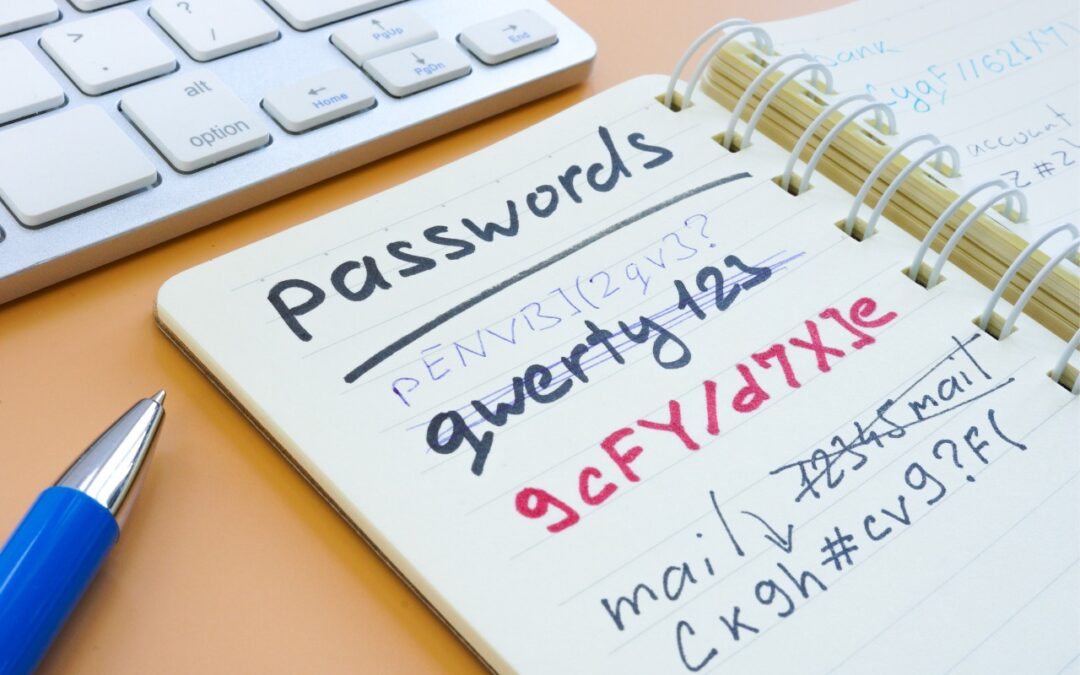
One small way Apple’s Passwords app lagged behind top password managers like 1Password was in its lack of a password history. It’s sometimes helpful—such as when trying to figure out why a seemingly correct password isn’t being accepted—to see previous passwords for a site and when they were changed. In macOS 26 Tahoe, iOS 26, and iPadOS 26, the Passwords app adds that feature. Click or tap View History to review the history of a particular site’s passwords.

(Featured image by iStock.com/designer491)
Social Media: Apple’s Passwords app can now show your password history in macOS 26 Tahoe, iOS 26, and iPadOS 26, helping you track down why that “correct” password isn’t working.
by Steve Sorbo | Jul 3, 2025 | Uncategorized
Data breaches keep coming, and the latest one revealed by Cybernews involves 16 billion passwords. There’s no way to know for sure if your passwords are included, though it’s always worth checking Have I Been Pwned and paying attention to monitoring features in password managers. Some media reports claim that passwords from accounts at Apple, Facebook, and Google were leaked, but this is likely overblown. While some accounts at those companies were compromised by infostealers, there were no centralized breaches. Our advice remains the same: use a password manager to ensure that each of your accounts has a strong, unique password and turn on two-factor authentication whenever possible.

(Featured image by iStock.com/tsingha25)
Social Media: Another day, another breach—this time involving 16 billion passwords. Despite alarming headlines about Apple, Facebook, and Google accounts, there’s no need to panic. Our advice? Use unique passwords and enable 2FA.

Recent Comments